Introduction
In the world of construction, the importance of waterproofing cannot be overstated. It serves as the first line of defense against water damage, which can lead to structural deterioration, mold growth, and costly repairs.
Whether you’re a site engineer, contractor, or product applicator, understanding the necessity of waterproofing solutions is crucial to the success of your projects. Without proper waterproofing measures, buildings can face a myriad of challenges, including compromised integrity and reduced lifespan.
Why is waterproofing important in construction?
Imagine a newly constructed building experiencing water-related damages just a few months after completion. The repercussions are financial and reputational, as clients expect durability and quality. This is where effective waterproofing solutions come into play, ensuring that structures remain safe, functional, and aesthetically pleasing for years to come.
Waterproofing is a critical aspect of construction and building maintenance that ensures structures remain safe, durable, and functional over time. In Nigeria’s diverse climate, where heavy rainfall can lead to significant water damage, understanding the importance of waterproofing is essential for site engineers, product applicators, and distributors alike.
Here are some key reasons why waterproofing should be a priority in any construction project:
1. Protection Against Water Damage
Water intrusion can lead to severe structural damage, including rot, mold growth, and corrosion of building materials. Waterproofing systems, such as Bitumax membrane, Roflex membrane, and BituNil MembraNil, create a barrier that prevents water from penetrating roofs and foundations, thereby protecting the integrity of the building.
2. Increased Longevity of Structures
Investing in quality waterproofing solutions can extend the lifespan of a building. By preventing moisture-related issues, structures can maintain their aesthetic appeal and functionality for years to come.
3. Enhanced Indoor Air Quality
Moisture buildup can lead to mold and mildew, which are not only damaging to structures but also pose health risks to occupants. Effective preferred waterproofing materials help to maintain a dry environment, improving indoor air quality and ensuring a healthier living and working space.
4. Cost Efficiency
While waterproofing may seem like an additional expense, it is a cost-effective measure in the long run. The costs associated with repairing water damage, mold remediation, and structural repairs far exceed the initial investment in waterproofing materials like Bitumen Membrane and Liquid Primer.
5. Compliance with Building Codes
Many regions have specific building codes and regulations regarding waterproofing, especially in areas prone to flooding or heavy rainfall. Adhering to these codes not only ensures safety but also protects against potential legal liabilities.
6. Increased Property Value
A well-waterproofed property is more attractive to potential buyers or tenants. And can significantly increase the marketability and value of a property.
7. Versatile Applications
Waterproofing solutions are versatile and can be applied to various surfaces, including roofs, basements, foundations, and terraces. Products like Kenvee’s Insucoat primer and the APP Roll Membrane are designed for easy application, making them ideal for both new constructions and renovations.
Types of Waterproofing Solutions
When it comes to waterproofing or type of waterproofing material, there are several methods available, each with its unique advantages and applications. Understanding these can help you select the right adaptable solution for your specific needs.
Below, we will explore various types of waterproofing solutions, including internal, external, and combination waterproofing systems.
External Waterproofing Systems
External waterproofing systems are designed to prevent water from entering a structure from the outside. This method typically involves applying a waterproof barrier to the exterior surfaces of foundations or walls. The role of external waterproofing is to protect the structure from water damage caused by rainwater and groundwater.
- Liquid-Applied Waterproofing: Liquid membranes are particularly effective for external applications as they create a seamless barrier that can conform to complex geometries. These membranes are ideal for below-grade structures like basements and underground parking garages, ensuring robust protection against moisture ingress. In regions prone to heavy rainfall, such as Nigeria, utilizing liquid-applied waterproofing solutions can significantly enhance structural integrity.
Insucoat Primer
Consider using Kenvee’s liquid waterproofing Insucoat Primer for reliable external protection against moisture. - Cementitious Waterproofing: This straightforward and cost-effective cement-based solution is also suitable for external applications, especially on concrete surfaces. Cementitious waterproofing can be applied to foundations and retaining walls, providing a durable defense against harsh environmental conditions. Proper surface preparation is crucial to maximize its effectiveness.
For optimal results, look into Kenvee’s Bitumen Membrane, which complements cementitious methods.
Internal Waterproofing Systems
Internal waterproofing systems focus on managing water that has already entered a structure. They redirect moisture away from the interior spaces, often using drainage systems, sump pumps, and waterproof coatings.
- Cementitious Waterproofing: While primarily effective externally, cementitious solutions can also be applied internally to manage moisture levels in areas like basements and crawl spaces. They help prevent mold growth and structural damage by providing a robust barrier against moisture. Kenvee’s Liquid Primer can be an excellent choice for enhancing adhesion in internal or external applications.
- Membranes: Internal waterproofing often utilizes liquid or sheet membranes to create a protective layer against moisture. These waterproof membranes can be applied to walls and floors, redirecting water away from critical areas. Their versatility makes them a practical choice for various internal applications.
Discover the Best Waterproofing Solutions for Your Projects!
Are you ready to take your construction projects to the next level with Kenvee’s premium waterproofing products? Subscribe now to receive exclusive updates on our product range, including:
- Bitumax Waterproofing: Stands out for its suitability for both above-ground and below ground structures.
- BituNil MembraNil : Perfect for internal & external moisture management.
- Roflex Waterproofing : Ideal for external applications.
- Bitumen Membrane Solutions: Durable protection for foundations and roofs.
- Insucoat Primer: Ensures easy application while providing a strong, resilient adhesive bond on suffaces.
Get Expert Insights and Special Offers!
Want to speak with an expert? Chat or Call Now for personalized assistance and product recommendations!
Combination Waterproofing Systems
Combination waterproofing systems integrate both internal and external methods to provide comprehensive waterproofing measures. This approach is particularly beneficial for structures that face significant water exposure as it combines the strengths of both systems.
- Liquid-Applied Waterproofing: By employing liquid waterproofing membranes on the exterior to prevent water ingress and utilizing internal methods to manage any moisture that does penetrate, a combination system creates a multi-layered defense against water damage. This method enhances the overall durability and longevity of the structure. Kenvee’s Bitumen Membrane can be an integral part of your combination waterproofing strategy, offering superior protection.
- Cementitious Waterproofing: Similarly, a combination system can utilize cementitious waterproofing on both the external and internal surfaces. This dual approach ensures that moisture is effectively managed, reducing the risk of costly repairs in the future.
Consider Kenvee’s Liquid Primer in conjunction with cementitious solutions for optimal results.
Understanding the Importance of Drainage Systems
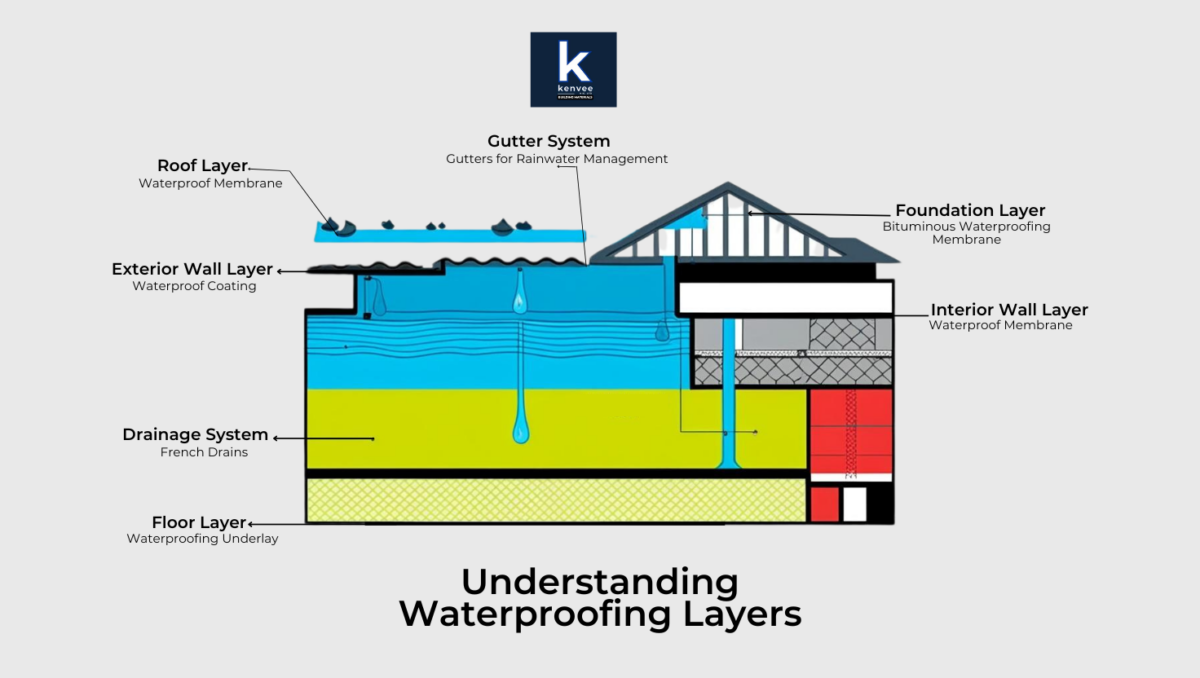
After exploring the various types of waterproofing solutions, it’s essential to understand that waterproofing alone is not enough to protect structures from water damage. Effective drainage systems are crucial for managing water flow and preventing pooling, ensuring that waterproofing measures perform their intended function.
What Are Drainage Systems?
While not a waterproofing solution in the traditional sense, drainage systems are integral to a comprehensive water management strategy. These systems work hand-in-hand with waterproofing membranes and coatings, diverting water away from critical areas. Without proper drainage, even the best waterproofing measures can be rendered ineffective, leading to costly damages and safety hazards.
Critical Areas for Drainage Systems
Site and building contractors must pay close attention to specific areas where drainage systems are crucial. Here are some critical zones to consider:
- Basements and Foundations: Water pooling around the foundation can lead to significant structural issues. Installing a proper drainage system, such as French drains or sump pumps, can help redirect water away from these vulnerable areas. This is particularly important in regions like Nigeria, where heavy rainfall can exacerbate water ingress.
- Swimming pools: In addition to safeguarding basements and foundations, it’s essential to consider the drainage needs of swimming pools, which can also be susceptible to water seepage and water penetration issues. Proper drainage around swimming pools is vital not just for maintaining the structural integrity of the pool itself but also for preventing water from pooling in adjacent areas, which can lead to erosion, damage, and potential water-related issues.
- Roofs and Gutters: Flat roofs are particularly susceptible to water accumulation. Ensuring that gutters are clear and functioning properly can prevent overflow and subsequent water damage. Regular maintenance of these systems is vital to prolonging the life of the roof and the building itself.
- Parking Lots and Driveways: These surfaces require adequate grading and drainage systems to handle runoff effectively. Without proper drainage, water can create hazardous conditions for vehicles and pedestrians. Implementing drainage solutions in these areas can enhance safety and usability.
- Landscaped Areas: Gardens and lawns should be designed with drainage in mind to prevent waterlogging, which can damage plants and lead to erosion. Proper drainage not only protects plants but also contributes to the overall aesthetic and functionality of the landscape.
The Interplay Between Waterproofing and Drainage
When considering waterproofing solutions, it’s essential to recognize their relationship with drainage systems. For instance, while a liquid-applied waterproofing membrane may provide a robust barrier against moisture, it must be supported by an effective drainage system to maximize its performance. This interplay ensures that water is effectively managed, reducing the risk of moisture intrusion and structural damage.
Factors Influencing Waterproofing Choices
When it comes to selecting the right waterproofing solution for a project, various factors come into play. Here, we’ll explore the key considerations that influence waterproofing choices, particularly within the Nigerian market, and how they relate to Kenvee Building Materials’ offerings.
1. Type of Structure
Residential buildings, commercial spaces, and industrial facilities all have different requirements based on their design, materials, and intended use. For instance, basements and foundations require a different approach compared to roofing systems. Kenvee’s range of waterproofing products, such as Bitumen Membrane, Roflex waterproofing, Bitumax waterproofing and BituNil MembraNil, are designed to cater to various structural needs, ensuring you have the right solution for your specific project.
2. Location and Environmental Conditions
Nigeria’s diverse climate, which includes heavy rainfall and humidity in many regions, necessitates a robust waterproofing solution. The chosen waterproofing system must withstand these environmental challenges to prevent moisture infiltration, ensuring that your structures remain dry and durable.
3. Building Materials and Their Properties
When selecting a waterproofing solution, the choice of building materials plays a crucial role in determining effectiveness. The material composition can significantly influence how well it interacts with waterproofing products. For instance, porous materials like concrete and brick are more susceptible to moisture absorption, making them vulnerable to water damage.
4. Application Method
The method of application is another critical factor. Some waterproofing products require specialized techniques or equipment, which can influence the choice of materials. For example, APP Roll Membrane products are user-friendly and can be installed with relative ease, making them a popular choice among site engineers and applicators.
5. Longevity and Maintenance
Choosing a waterproofing solution also involves considering its longevity and maintenance needs. A product that requires frequent repairs or replacement can lead to increased costs over time. Therefore, it’s crucial to invest in high-quality waterproofing materials that offer durability.
6. Budgeting for a Waterproofing Solution
Budgeting is a vital aspect of any construction project, and the waterproofing method decision is no exception. The cost of materials, labor, and potential future repairs must all be factored into the overall budget. It’s essential to balance cost with quality, as opting for the cheapest option may lead to higher expenses down the line due to failures or inadequate performance.
Explore Kenvee’s Bitumax waterproofing for effective internal moisture management.
The Impact of Moisture on Structures
Understanding the impact of moisture on structures is crucial for waterproofing experts in the construction sector.
Moisture intrusion poses significant hazards that can compromise the integrity of building projects, leading to costly repairs and safety concerns. In this context, an effective “structure waterproof” becomes essential.
Here are several reasons why implementing robust waterproofing applications is key:
- Threats to Structural Integrity
Moisture is one of the most significant threats to the integrity of structures, particularly in the construction industry. Water intrusion can lead to structural damage, mold growth, and health hazards. When water penetrates building materials, it weakens structural components and compromises the safety of the building envelope. - Consequences of Water Seepage
For example, water seepage through basement walls or foundation walls can result in extensive damage over time, leading to costly repairs and a reduction in property value. This underscores the importance of moisture control to protect entire structures. - Hydrostatic Pressure
One of the primary concerns associated with moisture is hydrostatic pressure, which occurs when groundwater exerts pressure against a structure. This pressure can cause water to infiltrate through cracks and seams, particularly in concrete structures. Without proper waterproofing measures, such as the installation of a waterproof membrane, structures may be at risk of severe water-related issues. - Importance of Waterproofing Systems
Waterproofing systems, including liquid waterproofing membranes and cementitious coatings, provide essential protection against water penetration. These systems ensure that buildings remain safe and dry, even in challenging environmental conditions. Using moisture insulation materials can significantly enhance the durability of building structures. - Health Risks from High Moisture Levels
The impact of moisture extends beyond structural integrity. High moisture levels can lead to mold and mildew growth, creating health risks for occupants. This is particularly concerning in areas like commercial buildings and water tanks, where prolonged exposure to moisture can result in significant health hazards. - Mitigating Risks with Quality Products
By investing in high-quality waterproofing products, contractors can mitigate these risks and enhance the longevity of their construction projects. Waterproof coatings and protective coatings not only act as barriers against water but also improve the overall durability of the building materials. This resilience is crucial for controlling moisture content and ensuring a durable structure. - Enhancing Construction Practices
Effective moisture control during construction is vital. Utilizing advanced waterproofing solutions, like Kenvee’s Bitumax waterproofing, can significantly improve moisture management, ensuring that surfaces in construction are adequately protected against water damage.
Best Practices for Implementing Waterproofing Solutions
Selecting the Right Waterproofing Method
Choosing the appropriate waterproofing method is crucial for the success of any construction project. Various types of waterproofing materials are available, each designed for specific applications and environments. The concept of waterproofing involves understanding the unique requirements of your project, including the type of structure, environmental conditions, and potential moisture sources. It’s essential to assess the preferred waterproofing method that aligns with your project needs. For example, membrane waterproofing covers are ideal for areas prone to heavy water exposure, while integral waterproofing may be more suitable for concrete structures. By selecting the right waterproofing materials, you can ensure effective moisture control and enhance the durability of your building projects.
Hiring Qualified Waterproofing Professionals
The application of waterproofing requires specialized skills and knowledge. Hiring qualified waterproofing professionals is a critical step in ensuring accurate waterproofing. Experienced contractors understand the intricacies of different waterproofing methods and can recommend the best practices based on your project’s specific requirements. They are also familiar with the latest products in the market, allowing you to choose from a comprehensive product portfolio that meets your needs. Proper precautions should be taken to verify the qualifications and past performance of any waterproofing professional you consider. This investment in expertise can lead to more effective waterproofing efforts and ultimately save you time and money in the long run.
Regular Inspection and Maintenance
Additionally, maintenance routines should be established to address any wear and tear that may occur over time. This proactive approach is essential for preserving the integrity of your structure and ensuring that your waterproofing efforts continue to perform as intended. By incorporating regular maintenance into your construction practices, you can extend the lifespan of your waterproofing solutions and protect your investment in materials for building projects.
Frequently Asked Questions (FAQs)
1. What happens if waterproofing is not done?
If waterproofing is not done, structures can be severely compromised, leading to a host of issues such as water infiltration, mold growth, and structural damage. Over time, moisture can weaken the foundation, cause paint to peel, and lead to the deterioration of building materials, ultimately resulting in costly repairs.
2. What are the different types of waterproofing materials available?
There are several types of waterproofing materials, including cementitious waterproofing, bituminous waterproofing, liquid waterproofing membranes, and protective coatings. Each type has specific applications and advantages depending on the structure and environmental conditions.
3. How does waterproofing help in maintaining indoor air quality?
Effective waterproofing prevents moisture buildup, which can lead to mold and mildew growth. By creating a dry environment, waterproofing solutions enhance indoor air quality and promote a healthier living and working space.
4. What is the importance of hiring qualified waterproofing professionals?
Qualified professionals have the expertise to assess your project’s specific needs accurately, recommend appropriate waterproofing methods, and ensure proper application. This expertise is essential for effective moisture control and long-term success.
5. Can waterproofing solutions increase property value?
Yes, a well-waterproofed property is more attractive to potential buyers or tenants. It provides peace of mind regarding water damage, which can significantly enhance marketability and increase overall property value.
Conclusion
In the construction sector, advantages of waterproofing solutions are not merely an added expense; they are a vital investment that safeguards the integrity and longevity of structures. By understanding the various types of waterproofing materials, from cement-based options to advanced liquid waterproofing methods, professionals can implement protective measures that significantly reduce the risk of water damage.
By following these best practices and understanding the critical aspects of waterproofing in construction, stakeholders in the construction industry can effectively manage moisture and protect their investments in building projects. Whether you’re involved in residential, commercial, or industrial construction, prioritizing waterproofing will lead to safer, and more durable structures.
Stay Ahead in Construction: Get Exclusive Waterproofing Insights!
Looking to enhance your knowledge of waterproofing solutions and ensure the longevity of your construction projects? Subscribe to our newsletter and receive expert tips, on waterproofing techniques!
- Insights into the latest waterproofing materials and techniques
- Best practices for effective moisture management
- Case studies showcasing successful waterproofing implementations
- Special offers on Kenvee Building Materials products